
I Spy Salamanders
By Andrea Naccarato/DWR
In a park outside of Richmond, Virginia, a biting wind weaves through the trees and late winter sunlight beams down through a mostly leafless canopy. I’ve joined four other people here, all dressed in rugged winter attire, polarized sunglasses, and muck boots, who are working with a collective purpose. We walk single file down a narrow trail until we reach slippery mud around a shallow pond. A sprinkling of red maple flowers decorates the pond’s surface like confetti on a shiny tablecloth. We remain huddled near each other and, without stepping into the pond, gaze intently into the water, its surface reflecting the forest around us.
One of the observers, Emily Yeatts, clutches a clipboard to her chest with one hand and points with the other towards something she sees under the water. I squint past the reflection and try to find anything besides decaying leaves. Yeatts tries to pinpoint what she sees using words like, “look under the stick pointing diagonally to the left,” and “near the red maple flower in that patch of sunlight.” Then, suddenly, I see a tiny shadow flit over the mushy leaves and I can begin to visually decode the shape of a light brown, speckled larva of a marbled salamander, its tiny legs and tail tip gently resting on a leaf, its external feathery gills hovering behind its jaws like an elaborate headpiece. Spotting this larval salamander is like finding the trickiest item in an “I Spy” book, and now the wind doesn’t feel quite so cold.
Yeatts records our sightings and congratulates us on a fine start to the morning. But, we all know that our work is not yet done.
As we begin to tiptoe farther around the pond, I notice a slimy blob stuck to a submerged stick. At first glance, the blob looks like a loose mound of clear Jello with small olives suspended inside. Yeatts announces it is an egg mass of a spotted salamander, a species that lays its eggs later in the season than the marbled salamander. After I’ve seen one egg mass, I start noticing more of them under the water. The egg masses may not be the most attractive natural creations, but our team is nonetheless devoted to counting every single slimy egg mass in our ponds as winter shifts towards spring.
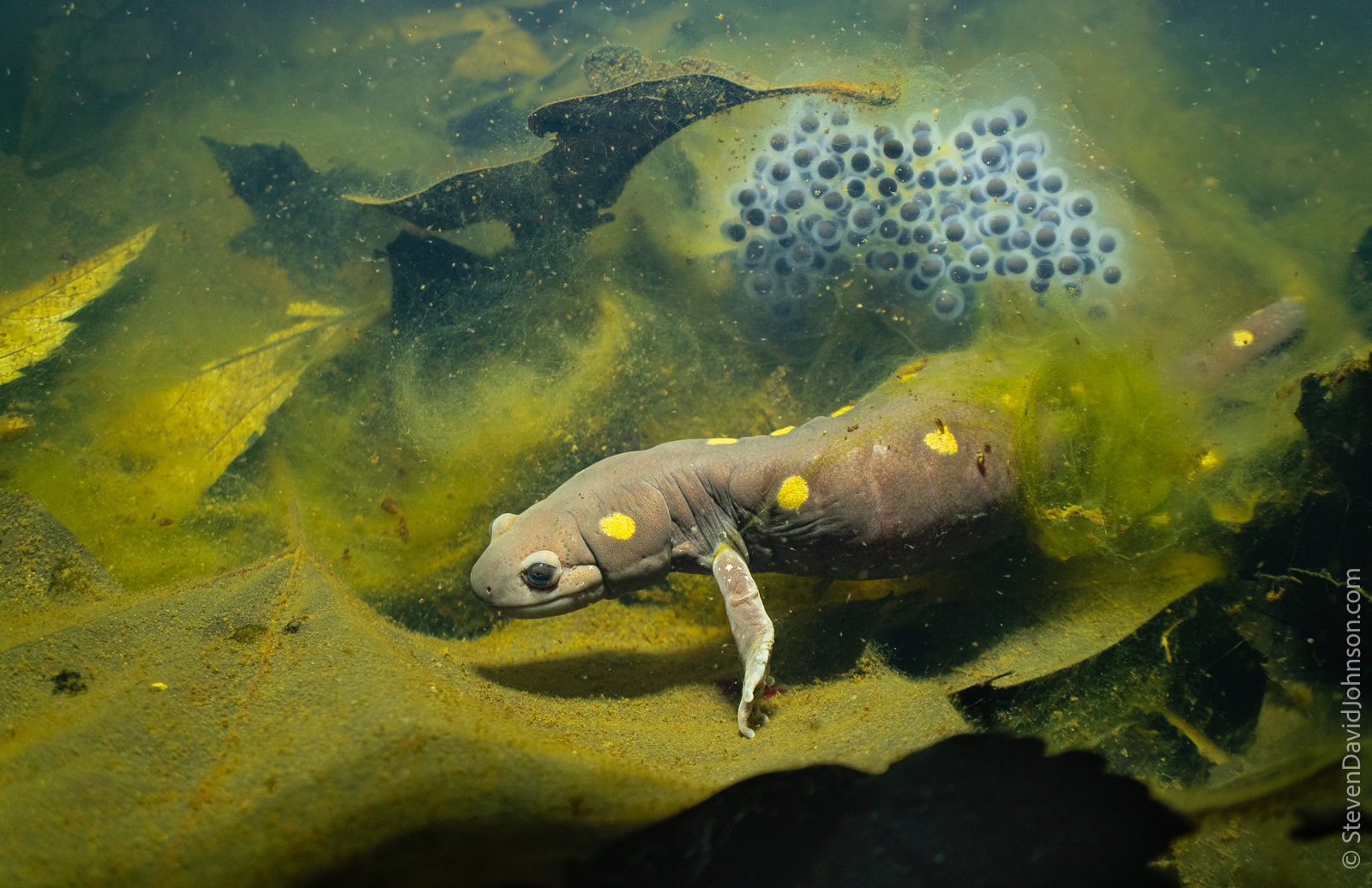
Adult female spotted salamander lay eggs in vernal pools, ephemeral wetlands that exist only in winter and spring. Photo by Steven David Johnson
Here Today, Gone by Summer
These ponds we’re monitoring are known as vernal pools, a type of ephemeral wetland that is filled with water only in the winter and spring. Falling rain and melting snow in the winter provide water that fills up low spots on the ground. By early spring, the vernal pools are generally at their maximum size in water volume, although their significance could still escape notice by springtime hikers.
“Sometimes these pools are very, very small, and a lot of people probably don’t even recognize them as a wetland. They just see it as a puddle,” commented Susan Watson, Terrestrial Wildlife Information Biologist for the Virginia Department of Wildlife Resources (DWR) and liaison for the Vernal Pools Cooperative of Virginia.
What could be so important about a temporary puddle in a forest? Like any other wild spaces in Virginia, these vernal pools might look unassuming, but they serve as essential habitat for native species. At least eight species of amphibians (known as vernal pool obligate species) rely on these vernal pools during a crucial part of their life cycles—when they mate and deposit their eggs. Because amphibians are especially vulnerable to dehydration through their permeable skin, the collected water in the vernal pools is key to their survival, especially during the egg and larval stages for most species.
In the case of the spotted salamander and their gelatinous egg masses, the protective coating around the eggs absorbs water over time and can eventually swell up to the size of a softball. “It’s like a nice gel pack that helps protect the eggs and keeps moisture around the eggs,” even if the water level in the pond goes down, Watson explained.
What causes the vernal pools to shrink? In the spring, many tree species surrounding vernal pools develop new leaves and begin sucking up more water with their roots to help fuel their new growth. Higher temperatures and longer days also accelerate evaporation as we head into summer.
Watson added, “Most [vernal pools] are not connected to running water, like a stream or a river. So, they’re isolated,” and more susceptible to drying out.
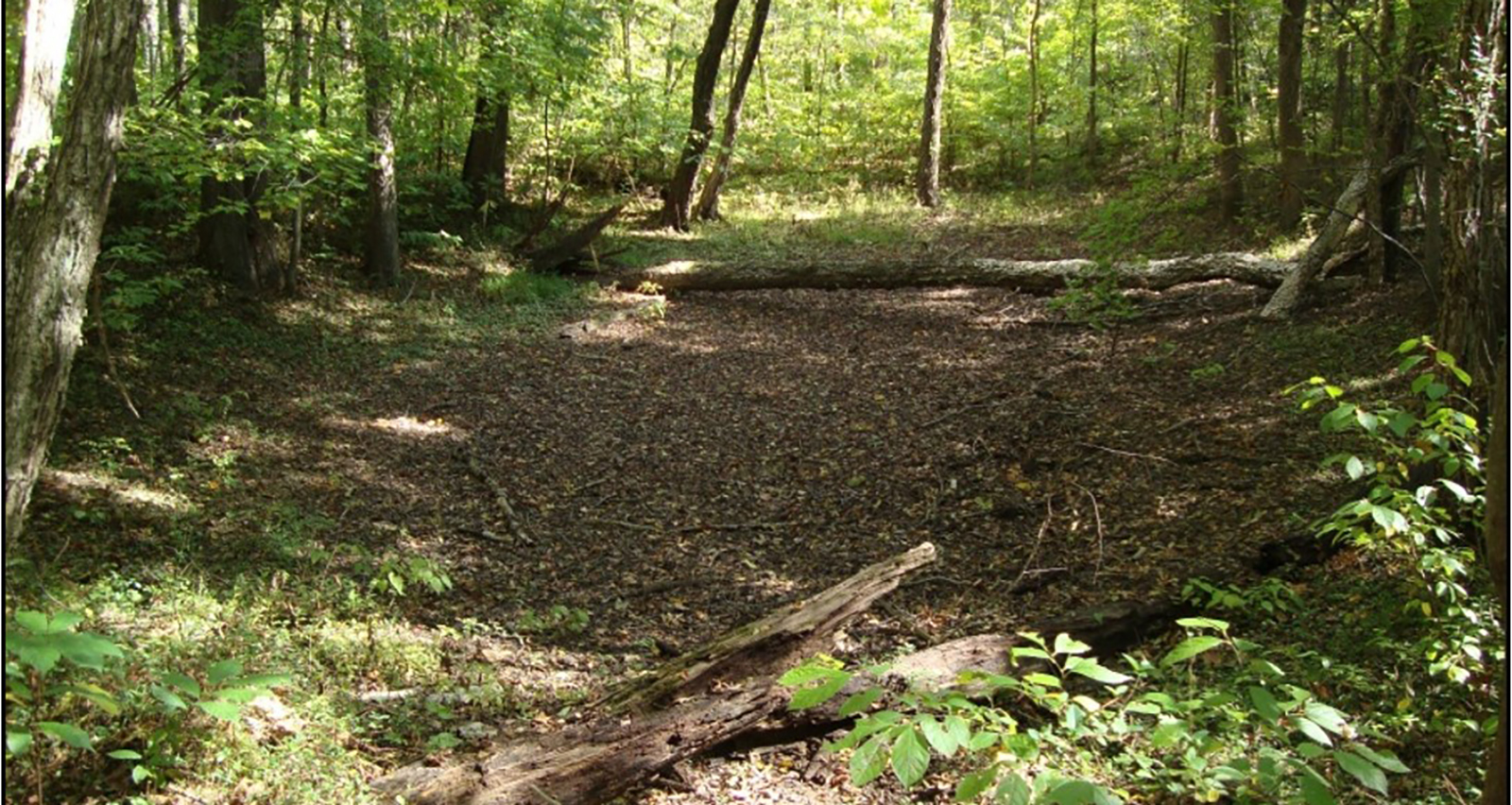
A vernal pool dry in the fall.
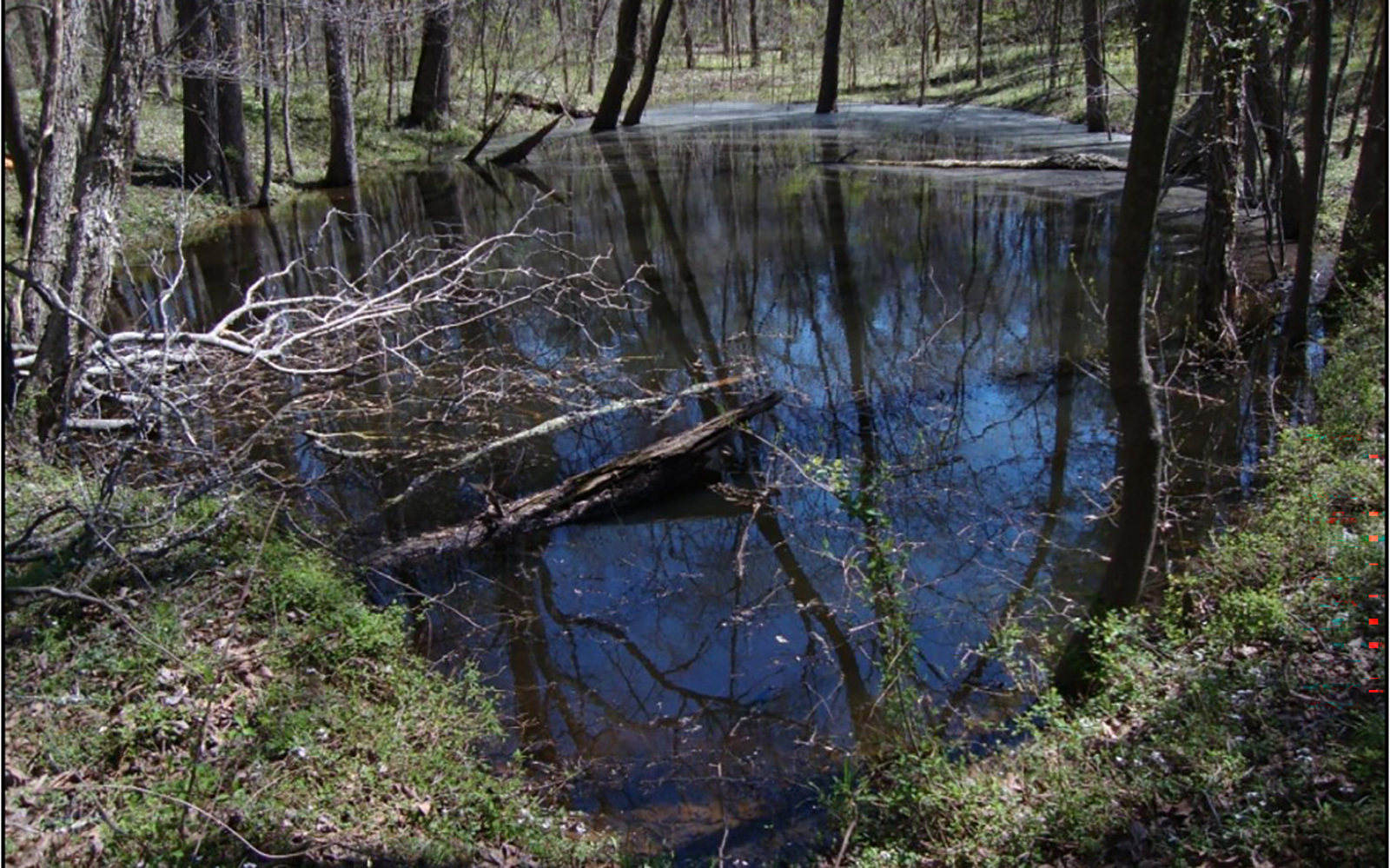
The same vernal pool full during the spring.
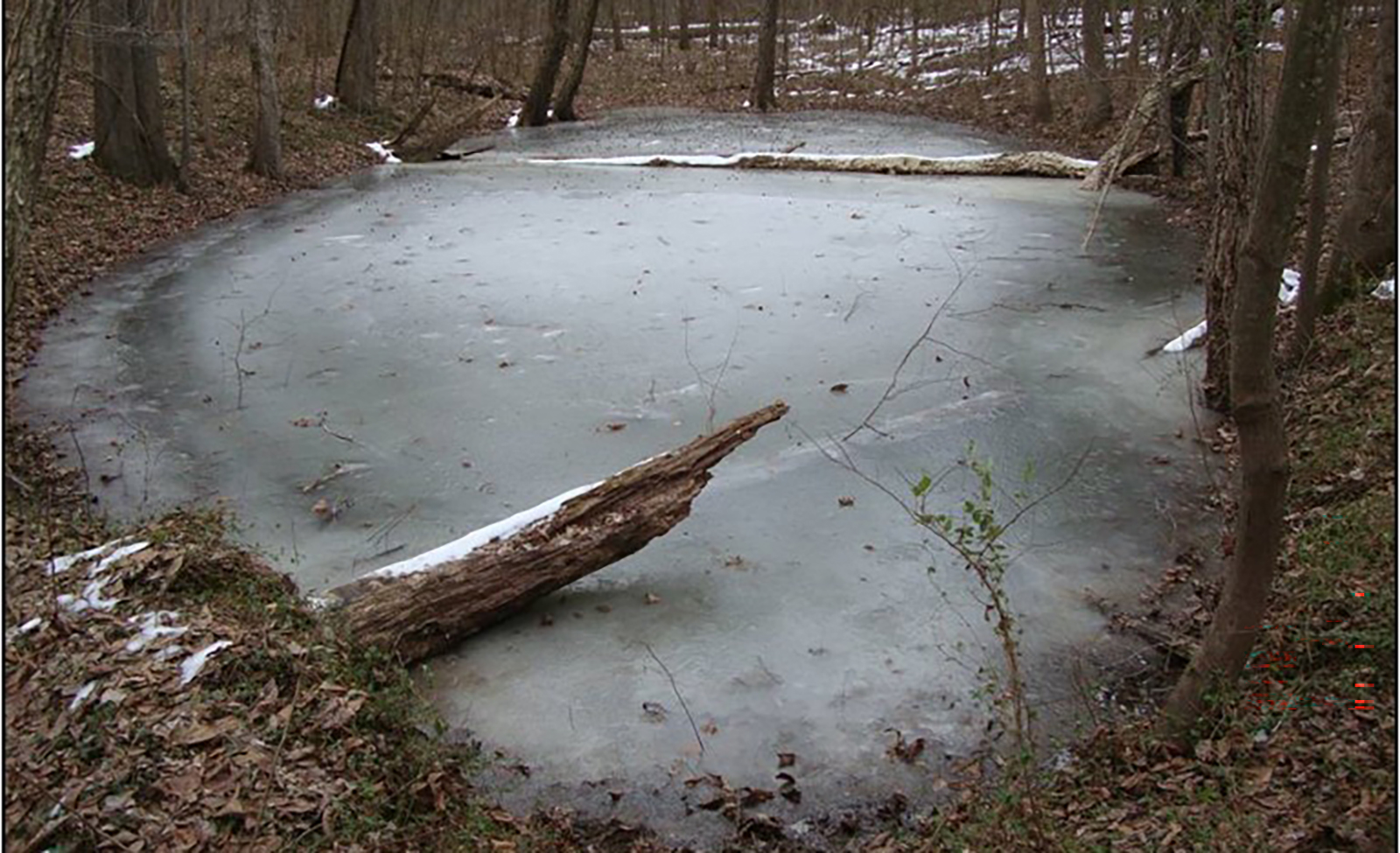
The same vernal pool iced over in the winter.
In an unexpected way, the isolated and temporary nature of a vernal pool is an advantage for obligate species that have evolved to breed in them. Vernal pools can’t support fully aquatic animals, like fish, that need to live in water year-round. The limited existence of these pools means that fish and some other aquatic predators won’t be there to eat the salamander eggs or larvae.
But, it’s not just the vernal pools that are essential to these salamanders.
“They’re also dependent on the upland that surrounds it,” Watson said. “[The adult salamanders] hide most of the time in the leaf litter, under logs, maybe rocks, depending on the landscape. We want to make people aware that this [entire] habitat is very important for certain species to breed, or these species would not exist.”
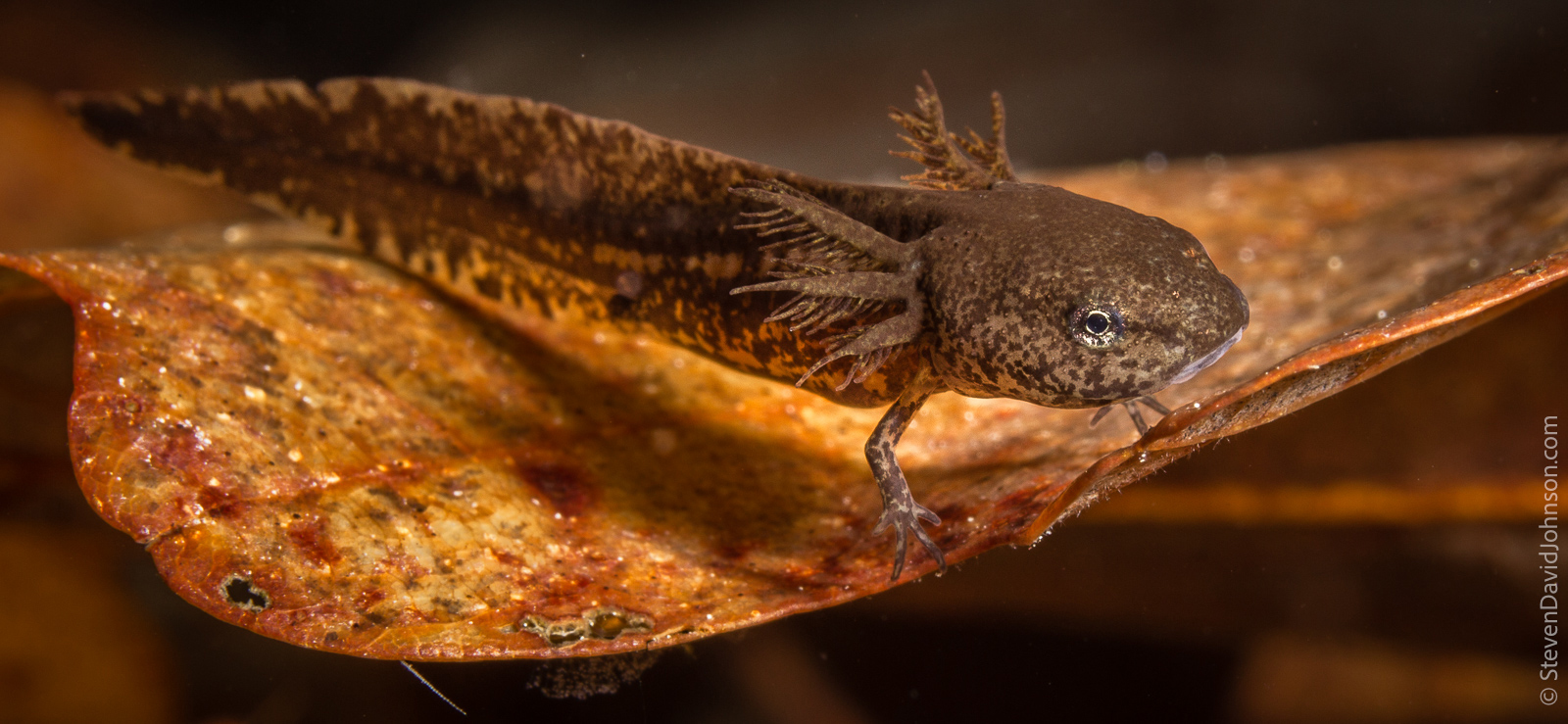
Larvae of the marbled salamander inhabit the water. Photo by Steven David Johnson
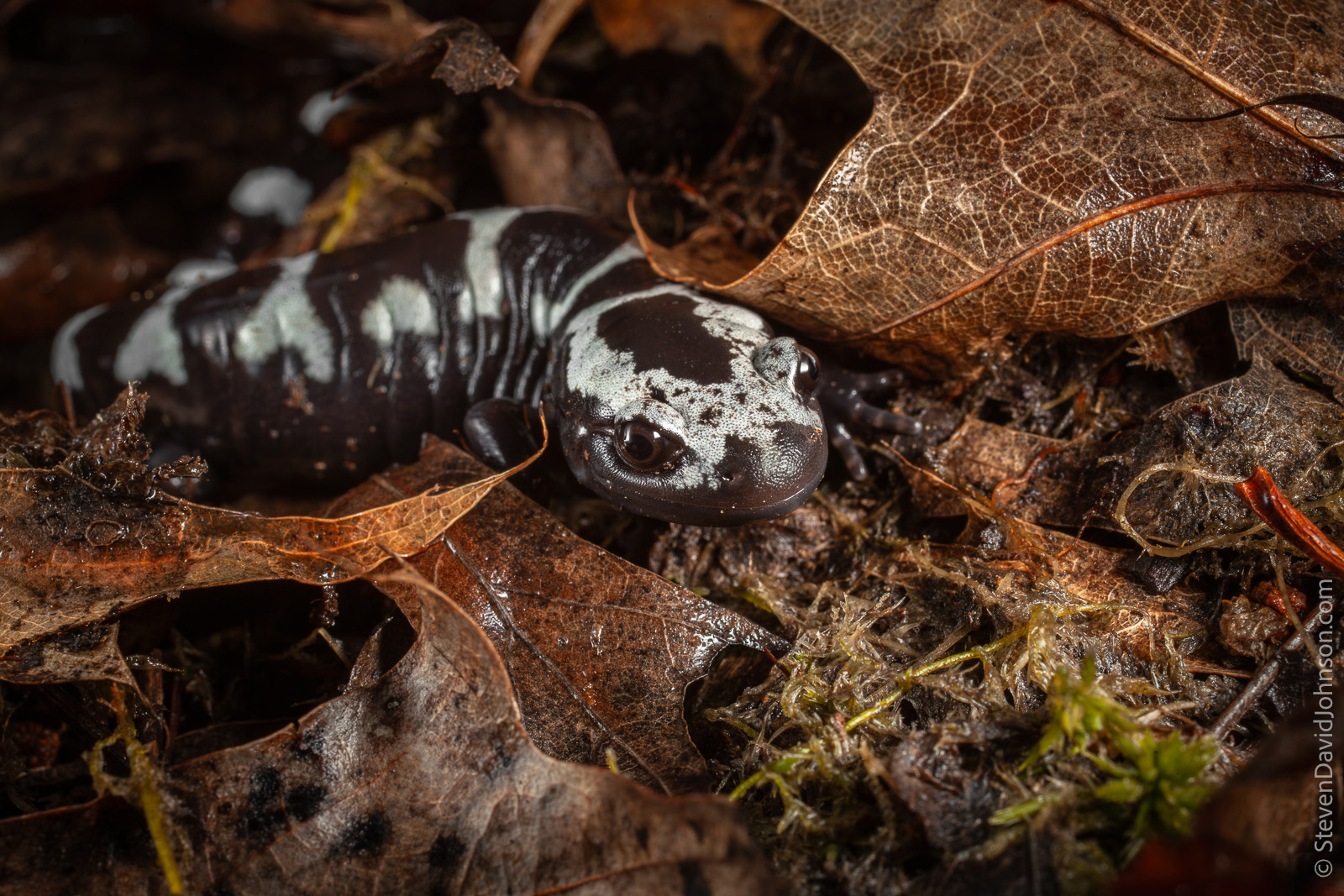
Adult marbled salamanders live in the upland habitat around vernal pools. Photo by Steven David Johnson
These seasonal ponds and their surrounding habitat can be found across Virginia. There was a time when simply locating the pools, let alone tracking which obligate species were reproducing where, may have felt like an impossible dream. So how do Watson and her fellow DWR biologists stay informed about the status of these widespread, yet often elusive, habitats and the species that depend on them?
Enter Virginia Master Naturalists
The dedicated individuals I met that cold day at the pond are my fellow Virginia Master Naturalists (VMNs) from the Riverine Chapter, as we volunteer our time and observational skills for the Vernal Pools Cooperative of Virginia. Master Naturalists complete months of specialized training about Virginia’s wildlife and ecosystems before committing to local projects related to citizen science, environmental education, or ecosystem stewardship.
From the beginning of the VMN program in 2005, it was clear that enthusiastic, knowledgeable volunteers could make a positive impact on conservation of Virginia’s wildlife and ecosystems. According to VMN Program Director, Michelle Prysby of Virginia Tech, “There’s more work to be done in terms of natural resource education and conservation than all our professionals have the time and ability and resources to do, so volunteers can help with that.”
As a state-run program under Virginia Cooperative Extension, the VMN program is co-sponsored by six other state agencies. Many VMN volunteer projects have an agency partner, such as DWR, Department of Conservation and Recreation (DCR), Department of Forestry (DOF), or Department of Environmental Quality (DEQ), that provides specialized training to the volunteers and directly benefits from the volunteers’ dedication to conservation.
The origin of the VMN’s vernal pools monitoring project can be found in the 1980s with a study initiated at Virginia Commonwealth University (VCU) in Richmond by Dr. Charles Blem and later continued by Anne Wright, Affiliate Faculty in VCU Life Sciences. VMNs from the nearby Riverine, Pocahontas, and Historic Rivers chapters were recruited and trained in 2011 to find any remaining pools from the original study (with the aid of written notes and a map of probable locations). When they succeeded in finding a vernal pool, the VMNs were also tasked with determining if, all those years later, there was any evidence that obligate species were still reproducing there.
The results showed that 53 percent of those historical vernal pools were found by the Master Naturalists. The rest were either confirmed lost (20%) or could not be found (27%). The good thing is the majority of the found pools were still functioning as reproductive sites for obligate species. The effort was so successful that everyone involved wanted more.
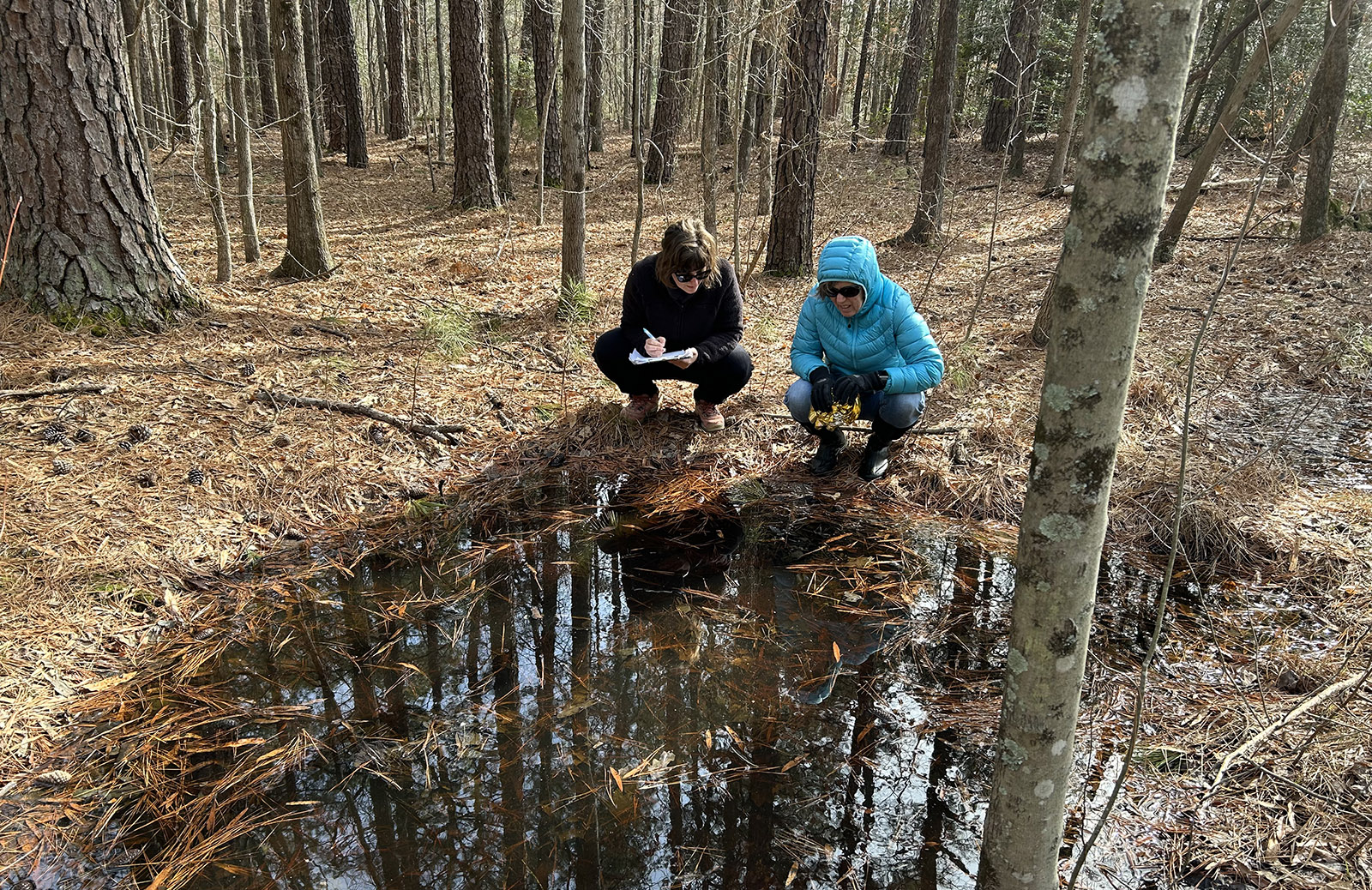
Virginia Master Naturalist volunteers have captured valuable data by monitoring vernal pools. Photo by Andrea Naccarato/DWR
“The volunteers really enjoyed the vernal pools and enjoyed the project,” Prysby recalled. “Anne Wright [of VCU] as well as Susan Watson from DWR thought it would be great to continue the project more broadly and shift the focus towards having Virginia Master Naturalist volunteers find and document vernal pools on public lands [across more of Virginia].” Bringing additional VMN chapters on board not only increased the number of people searching, but also covered more ground, thanks to the geographic extent of the 30 regional chapters that stretches from the Eastern Shore to Southwest Virginia.
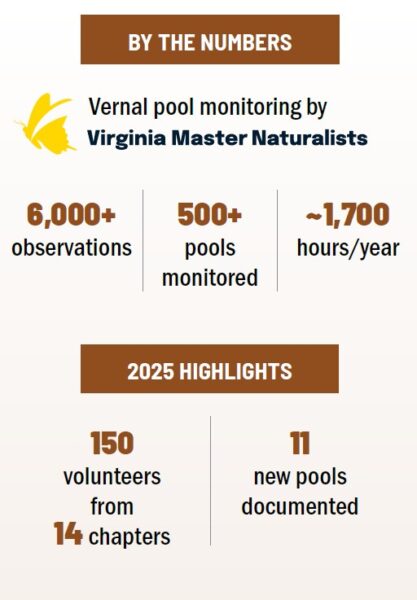 Today, VMNs record the location of every vernal pool they monitor and the numbers of egg masses they count in a statewide database. Since the Master Naturalists have become involved, more than 500 vernal pools have been located and monitored across at least 35 Virginia cities and counties, spanning from Gloucester to Wise and Sussex to Frederick. The field work and observations by hundreds of Master Naturalists over the years have resulted in an incredible collection of vernal pool knowledge in Virginia.
DWR and other conservation partners can utilize the extensive database to update their understanding of species distributions and inform any conservation actions that would benefit vernal pool obligate species. For example, vernal pool monitoring records by VMNs in James River National Wildlife Refuge helped guide selective forest thinning, leaving buffers of limited to no tree cutting near the vernal pool sites. The more we know about wildlife’s use of the landscape, the better we can all steward Virginia’s habitats.
The Call of the Ponds
The significant effort contributed by VMNs to vernal pool monitoring and conservation is easy to see. But, given that many people are repulsed by “slimy” creatures like salamanders and frogs (not to mention their slimier egg masses), why have so many volunteers chosen to devote their time to this particular project?
The first ever exposure for some Master Naturalists to vernal pools is on a field trip guided by Wright and Watson.
Watson admitted that she has “always had an affinity for animals that most people don’t like.” Beginning her career in nature centers housing some of those “less likeable” critters, Watson developed skills for helping people see why amphibians are just as worthy of their adoration as any mammal or bird. So, when Wright and Watson tell the stories of these cold-blooded amphibians with warmth in their voices, the naturalists-in-training start falling in love with Virginia’s wide diversity of salamanders and frogs well before leaving the classroom.
However, feeling the love for the salamanders and vernal pools is not always enough. After all, there are seemingly endless conservation projects we volunteers could do (with nearly 100 options for the Riverine Chapter alone). Skill sets, goals, schedules, and even life’s curveballs all influence the projects we ultimately choose.
One of those curveballs led Yeatts to the ponds. “After being a Master Naturalist for two years, I was in a serious car accident that injured my shoulder,” Yeatts said. “Suddenly, I found myself unable to participate in projects that I enjoyed because these projects required me to lift heavy objects and pull up plants with very strong root systems. I needed to figure out a way to pursue my interests, but in a different way.”
A pivot to a monitoring project worked well for Yeatts because monitoring requires a special knack for noticing changes in the environment, rather than the repetitive, physical tasks demanded in habitat stewardship.
Yeatts was trained in vernal pool monitoring by the Riverine Chapter’s lead project volunteer, Emily Gianfortoni, who has participated in this VMN project since the very beginning. When asked what initially drew her to what was then a fledgling project, Gianfortoni recalled, “I was interested in the citizen science aspect of it and the fact that we would actually be reporting our findings to a database that other people could use. That was very appealing.”
Beyond the data generated by the monitoring sessions, there’s something else that keeps Master Naturalists returning to the ponds. Yeatts summed it up well when she said, “Monitoring habitats over time and seeing how the environment changes over the course of the year is very grounding and helps you feel connected to the world around you.”
Every visit to the ponds is different, and we never quite know what we’re going to find.
The Only Constant is Change
When my fellow Master Naturalists and I return to our vernal pools a few weeks later, air temperatures have warmed and there is a very different look within the vernal pools’ ecosystem. Strong winds have been blowing through the pines, sending visible plumes of pollen through the air and settling onto the vernal pools. Where red maple flowers had danced before, layers of bright yellow pollen now swirl across the surface like whimsical chalk art.
One volunteer uses fallen twigs to gently sweep the surface coating of pollen aside, searching for glimpses of spotted salamander egg masses sure to be hidden below. But, this method only works for the smallest of ponds. For the larger ones, many egg masses presumed to be present must go unrecorded this week.
However, any disturbances or sudden changes to the vernal pool habitats, including this one, are recorded by Master Naturalists, too. The reason we don’t wade into the water to search for egg masses comes down to the fragility of the vernal pool habitat and the vulnerability of the developing salamanders. Even though I won’t make direct contact with the organisms themselves, I still sterilize my muck boots before every visit to prevent the possibility of spreading infectious diseases, like chytrid fungus, which is fatal to amphibians.
While today our necessary precautions limit our observational abilities, our monitoring team is already thinking ahead to positive changes the weather could bring. Rain is expected before the next monitoring session, and enough rain could rinse away the pollen covering the ponds. Hopefully next time we’ll be able to see clearly into the pools nurturing this year’s generations of marbled and spotted salamanders.
Like all good things in life, ideal vernal pools come and go. A certain pond could be full of egg masses one year and completely empty the next. But then a tree could be uprooted in a storm and a new vernal pool could form in the space left behind. The ephemerality of the vernal pools, part of their very essence, not only protects the amphibians who need them, but is also part of the magic that draws naturalists to their side from year to year.
As Gianfortoni said about the vernal pools she’s been monitoring since 2011, “It’s always changing, and it’s just interesting to see how things change.”
Andrea Naccarato is the DWR Outreach Production Assistant. As a Virginia Master Naturalist, she completed her first season of vernal pool monitoring in 2025.
How You Can Help Salamanders and Other Vernal Pool Species
- Conserve vernal pools and their surrounding habitats:
- Keep any rotting logs and rocks in place.
- Do not mow, graze, or timber any portions of your property that support vernal pools.
- Reduce or eliminate the use of fertilizers and pesticides, which could pollute vernal pools and harm wildlife, particularly amphibians like frogs and salamanders.
- Become a Virginia Master Naturalist and receive training to monitor vernal pools on your property or on public lands. Get started at virginiamasternaturalist.org
- Learn more about Virginia’s amphibians at dwr.virginia.gov/ wildlife/amphibians or purchase DWR’s Guide to Salamanders of Virginia gooutdoorsvirginia.com
Legal Disclaimer:
EIN Presswire provides this news content "as is" without warranty of any kind. We do not accept any responsibility or liability for the accuracy, content, images, videos, licenses, completeness, legality, or reliability of the information contained in this article. If you have any complaints or copyright issues related to this article, kindly contact the author above.
